
Traditional kitchens, built to last.
Framed shaker doors, real detailing, and a choice between genuine timber and honest MDF ranges — not a template picked from a showroom. Fitted across Warrington, St Helens, Widnes and Newton-le-Willows.
What "traditional" actually means
A framed door, not a country cottage.
A traditional kitchen is a shaker door — a recessed centre panel inside a visible outer frame. The frame can be real timber, joined in five pieces for genuine strength, or MDF with a foil or painted finish for a lower price at the same profile. Either way it sits on the same cabinet build as everything else we fit — 18mm back panels, a full cross rail, edging that won't peel, and adjustable legs to level it on an older floor. The style is entirely in the door and the colour, not the box behind it.
Ranges we can offer
What's actually available.
Every shaker range we fit, with real construction specs, not showroom talk. All of it comes with soft-close hinges and drawers as standard.
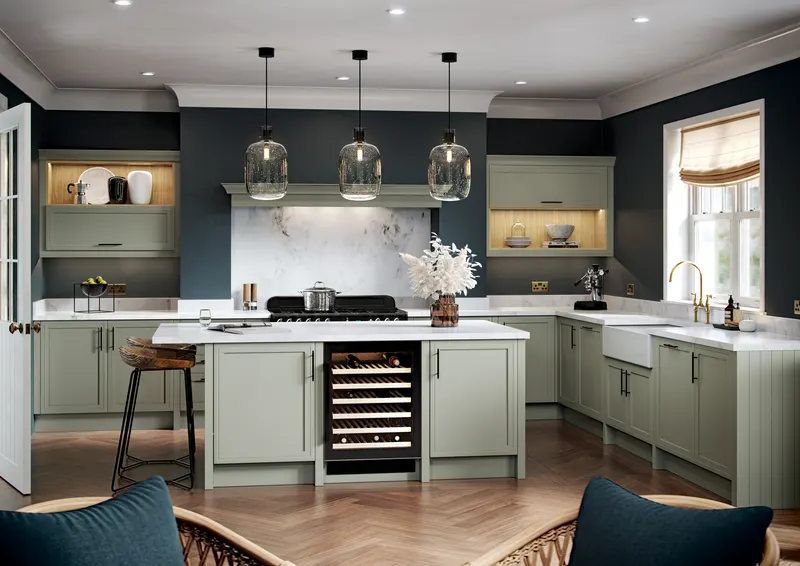 Brenta
A narrow-frame timber shaker with the in-frame effect, painted to order.
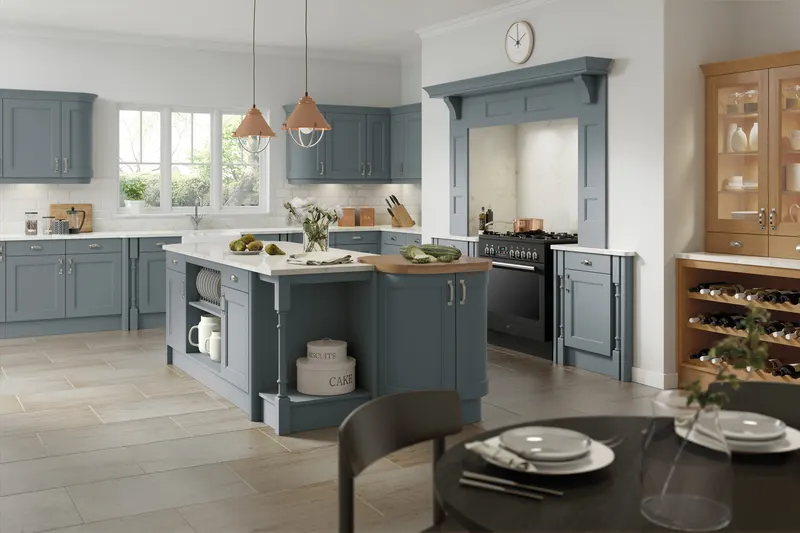 Caserta
A traditional shaker with beading inside the frame, in real timber.
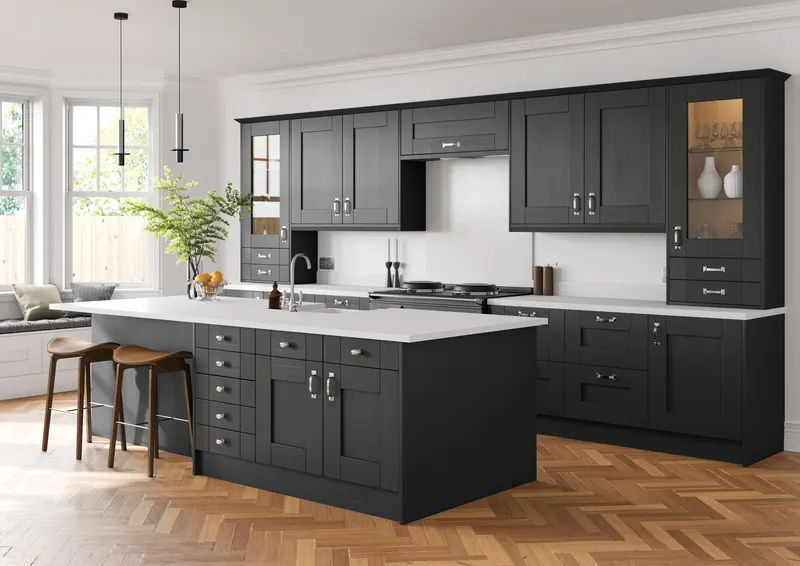 Como
A shaker profile in a woodgrain-effect foil over MDF, in ten colours.
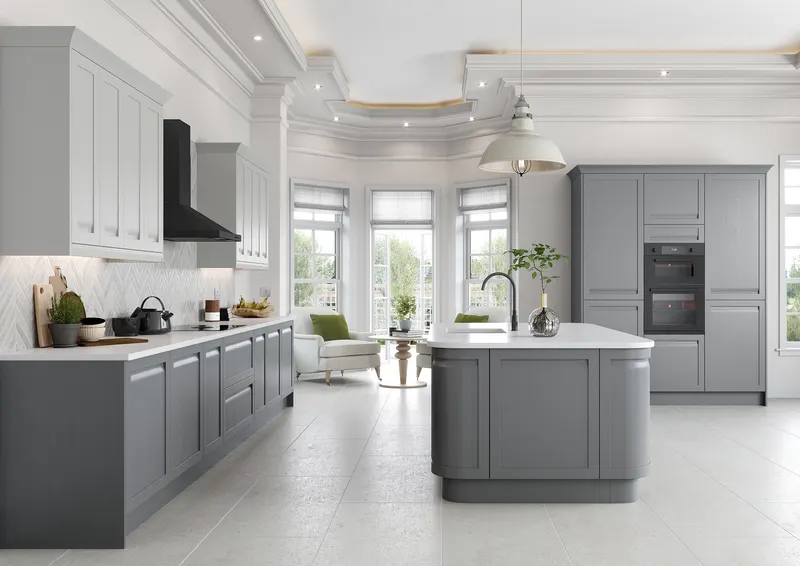 Garda
A shaker door with an integrated handle: classic style, handleless look, real timber.
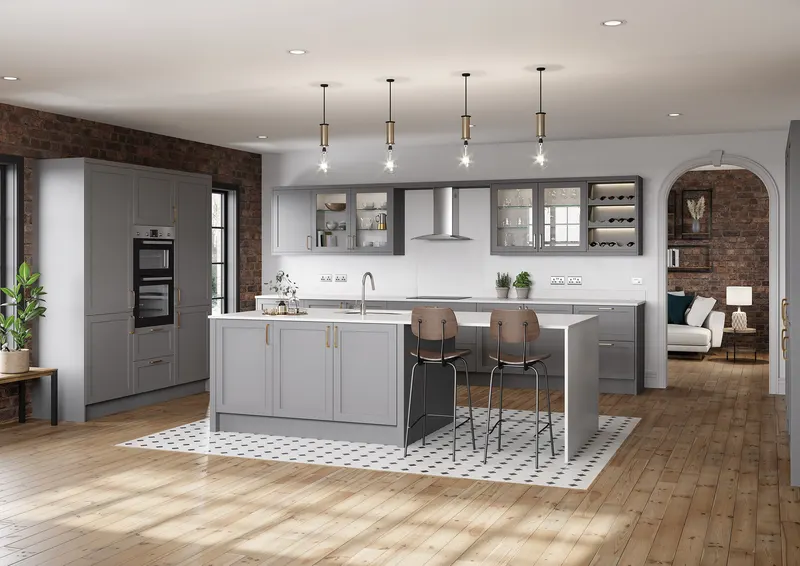 Neves
A slim-frame shaker in real timber, in contemporary painted colours.
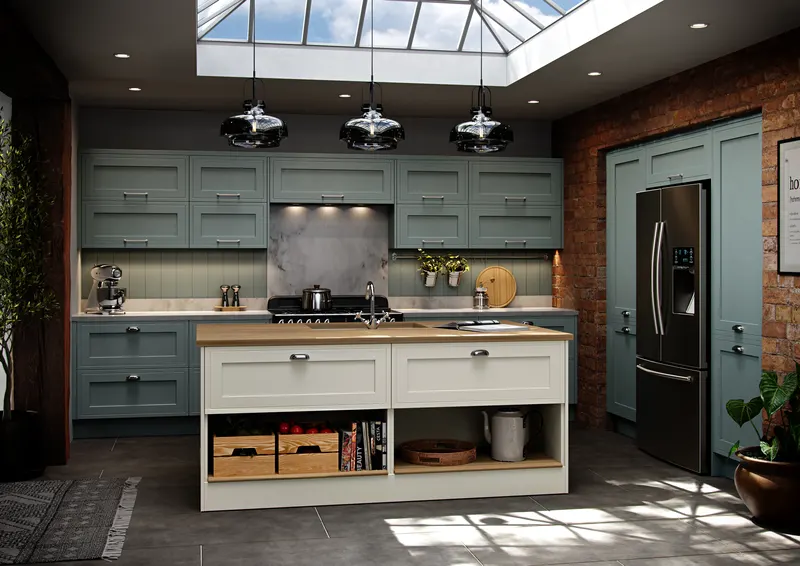 Piave
A one-piece shaker with the in-frame effect, painted to order, at a mid-band price.
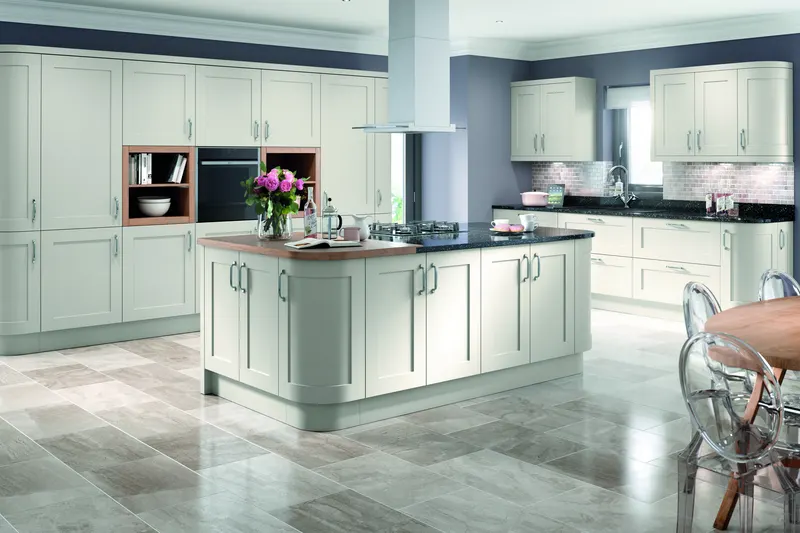 Portofino
A one-piece painted shaker door in five colours, with a soft smooth matt finish.
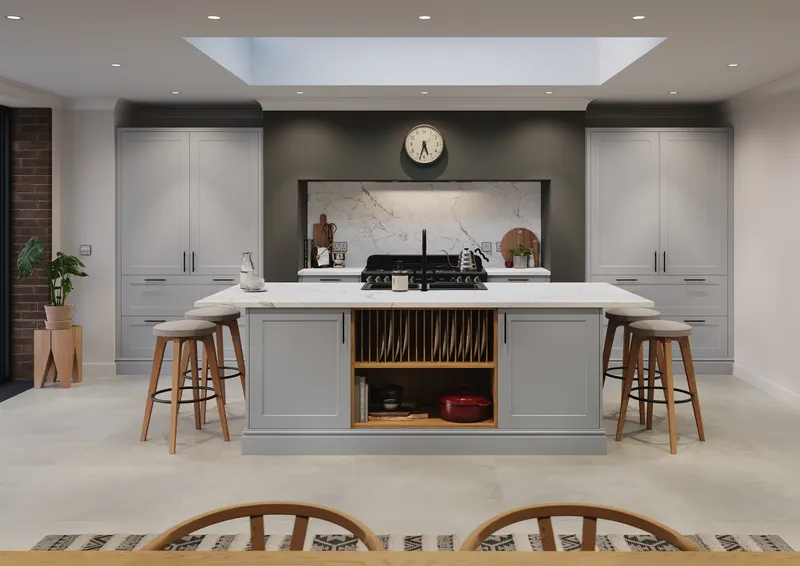 Riva
Como's construction with a narrower frame, for a slightly more contemporary shaker.
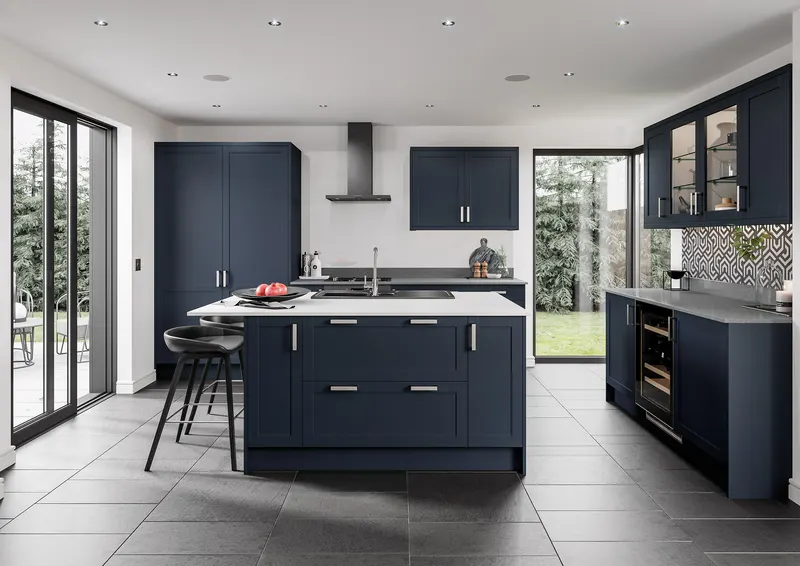 Salarno
A slim-frame shaker in four colours, wrapped over MDF, with glazed door options.
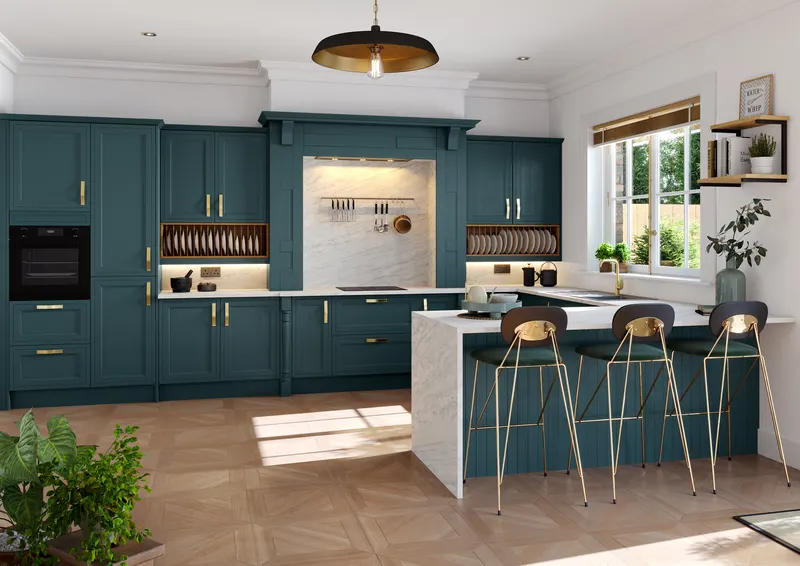 Savio
A real timber shaker with internal beading and an in-frame look, painted to order.
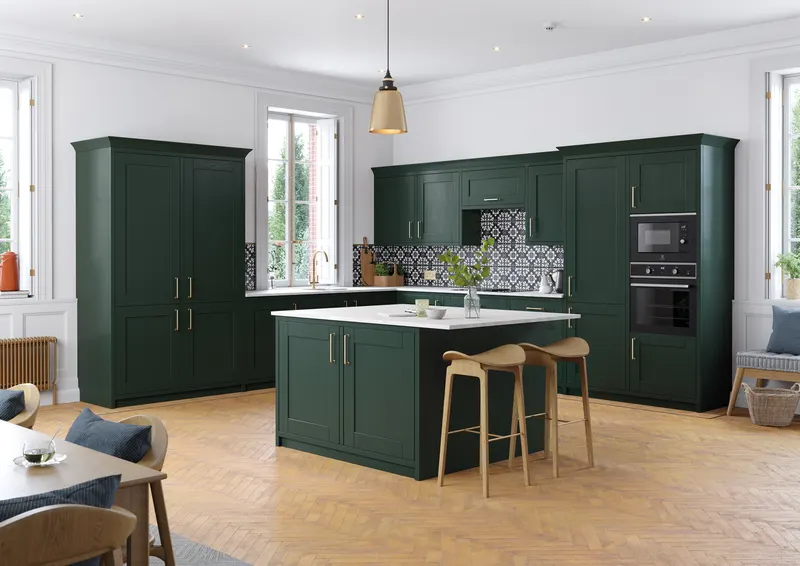 Caldaro
A proper five-piece shaker in real timber, painted, in nine stock colours.
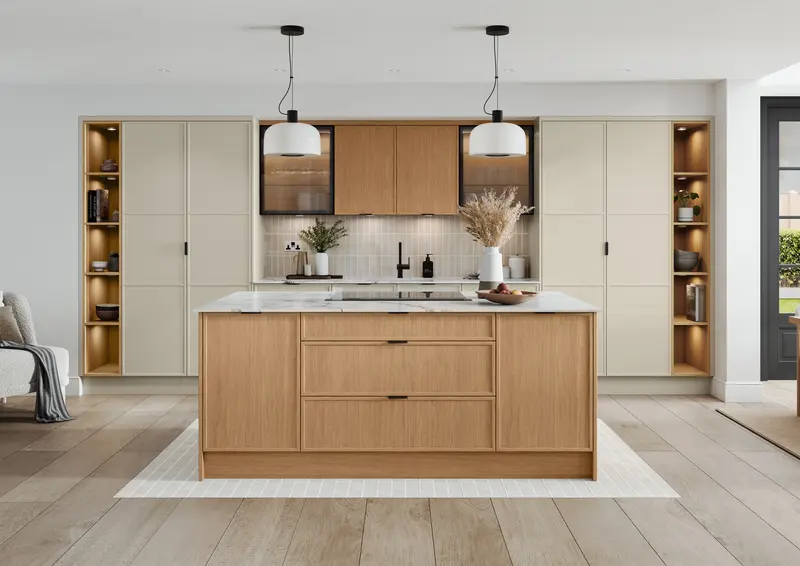 Regale
A slim-framed micro-shaker in real timber that bridges traditional and contemporary.
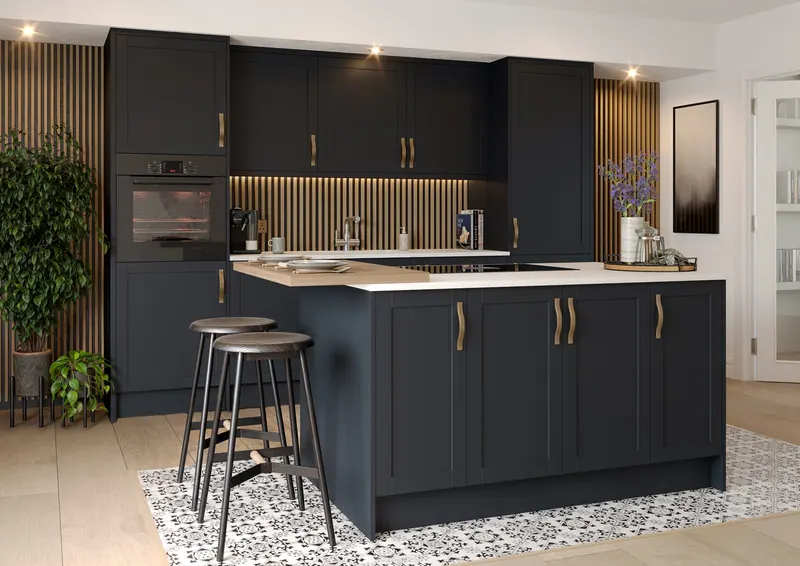 Lago
A shaker with a matt finish in white, light grey or indigo, at the lowest door price band.
From real-timber five-piece frames through to MDF woodgrain shakers at a lower price point. Open any range for its full spec and colours. If you want a specific colour, most ranges take paint to order: bring a sample to your free survey. See every range.
Cost and practicality
What it actually costs.
There's no separate "traditional" price list — a full design-and-install runs from £9,000 inc. VAT (design, supply and full project management); if you've already bought your doors, full project management of the fit is from £3,000 inc. VAT, or a dry-fit only install from £2,000 inc. VAT. Real-timber ranges like Caldaro and Savio generally sit toward the top of that range compared with MDF shakers like Como or Riva at the same frame shape — the difference is the door material, not the fit itself.
Frequently asked
The honest traditional questions.
Is a shaker kitchen harder to keep clean than a handleless one?
A little, yes. The recessed panel and the frame edge give dust and grease somewhere to sit that a flat slab door doesn't have. It's not a big practical problem — a cloth in the grooves once in a while handles it — but it's honest to say a shaker door needs marginally more upkeep than a contemporary slab front.
What's the actual difference between real timber and MDF shaker doors?
Real timber (Caldaro, Savio, Brenta, Regale) can be sanded back and repainted if it gets knocked, and it's what most people mean by "a proper shaker kitchen". MDF ranges with a foil or paint finish (Como, Riva) give you the same door shape and profile for noticeably less money, but a deep scratch shows the base material rather than sanding out cleanly. If budget's tight, MDF shaker is a genuinely reasonable compromise, not a false economy.
Does a traditional kitchen suit a modern extension or open-plan space?
Yes, more often than people expect. A narrow-frame shaker like Riva or Regale, in a darker or more architectural colour rather than a pale country palette, reads as classic rather than cottagey — it's the colour and frame width doing the work, not the shaker shape itself.
How many colours can I actually choose from?
36 paint-to-order colours across neutrals, greys, blues and greens, on top of each range's own stock colours. If you're matching an existing floor or worktop, bring a sample to your free survey and we'll tell you honestly whether it's a close match or a compromise.
Prefer a different look?
Two other styles we fit.
Bold · Architectural
Contemporary
Flat slab doors in matt, gloss, concrete or genuine woodgrain finishes.
View contemporary kitchensModern · Minimal
Handleless
No handles at all — a J-pull groove or an integrated rail system, on almost any door, including shaker.
View handleless kitchensReady to see it in your kitchen?
A free home survey is where finishes, layout and budget actually get pinned down — no obligation, no pressure.
Book a free home survey